


Classroom
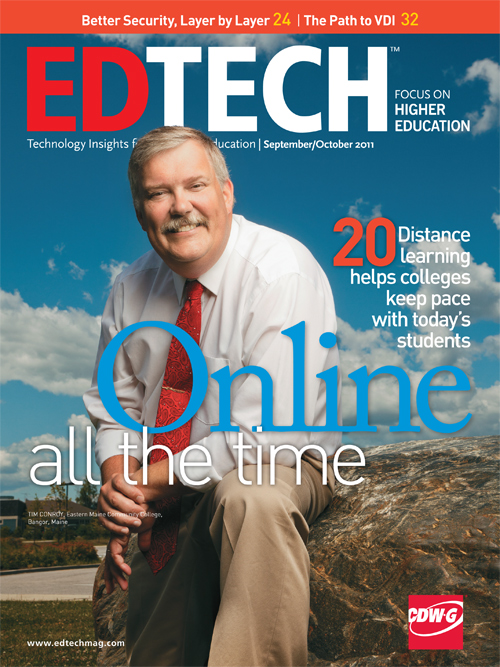
Why should universities and colleges expand their distance learning programs? Because today's students demand it.Departments
Power Management Made Easy
Green computing can be a maze of complex options, but the University of Maine at Farmington found that simply managing clients well works best.
Unleash the Cloud
Follow these five best practices to deliver cloud applications that ensure security and privacy.
Virtual Learning Comes Alive
East Carolina University leverages Second Life for virtual world simulations to improve distance and on-campus learning.
Tiers of Joy
Automated storage tiering delights IT managers because it lets them do more with less.
Asset Management Advantage
Self-service portals and outsourced imaging services streamline IT asset acquisition at the University of North Carolina at Chapel Hill.
ViewSonic Lights It Up
This short-throw projector is a handy tool for just about any type of presentation situation.
Opinion
Protecting Research Data
IT departments need to educate university research groups on the importance of enhanced security.

Copyright © 2026 CDW LLC 200 N. Milwaukee Avenue, Vernon Hills, IL 60061
Do Not Sell My Personal Information